Here's a game you can play at any gathering of the Irish abroad, and it will end in an argument within four minutes, guaranteed. Ask the room: what actually makes someone Irish?
Someone will say it's the passport. Someone else, older and holding a whiskey with more confidence than the first person, will say passports are paperwork and identity is blood. A third person, usually the one who did a DNA test as a birthday present to themselves, will produce a percentage, read out loud, with the seriousness of a man announcing a diagnosis. Somebody's cousin will mention a great-grandmother from Mayo nobody can actually name. Someone will bring up a pub in Boston that is, they swear, more authentically Irish than most pubs currently operating in Ireland. And at least one person will get quietly annoyed that the conversation is happening at all, because to them, obviously, being Irish is simply what they are, in the way that having lungs is what they are, and turning it into a debate feels faintly ridiculous.
That last reaction is the interesting one. It's also, we'd guess, exactly how most of Ireland's most celebrated minds felt — right up until the moment several of them very publicly didn't.
The ones who never had to ask
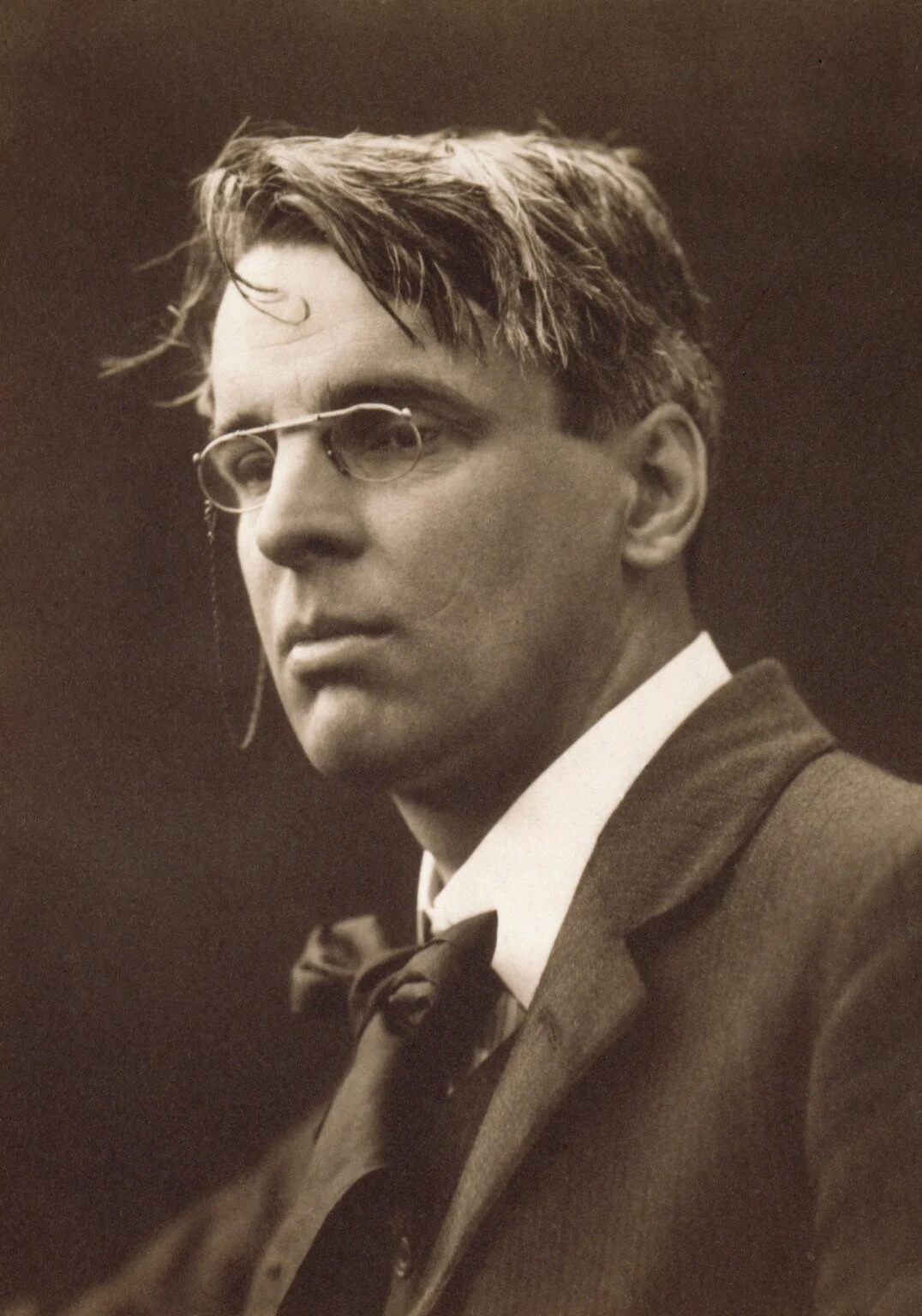
There's a comfortable story we tell about Irish genius: that the greats — the Yeatses, the Joyces, the Wildes, the physicists and mathematicians tucked into the footnotes of school textbooks — were simply, unselfconsciously Irish, the way a fish is unselfconsciously wet. Ireland was the water. They didn't think about it because there was nothing to think about. It was the given, not the achievement.
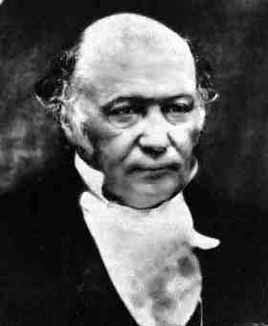
And there's real truth in that. William Rowan Hamilton, arguably one of the most important mathematicians the country has produced, spent his whole life within a short walk of Dublin, working at Dunsink Observatory, and by all accounts never once had to reach for an adjective before the word "mathematician." Ernest Walton is an even cleaner example: born in Waterford, educated at Trinity College Dublin, and the man who — alongside John Cockcroft — first split the atom in a laboratory a short walk from where he grew up, going on to win the Nobel Prize in Physics without ever needing to leave the country to do it. His Irishness wasn't a theme in his life's work. It was simply the return address.
Robert Boyle, born in Lismore, Co. Waterford, into the swirl of 17th-century natural philosophy, is claimed today with total confidence as one of the fathers of modern chemistry — Irish by birth, though he'd likely have found the modern fuss over the label a bit beside the point, since Ireland and England and science were tangled together in his lifetime in ways that don't map neatly onto today's flags.
But scratch a little harder at the supposedly "unconsidered" Irish greats, and the story gets much stranger, and much better.
The ones who ran
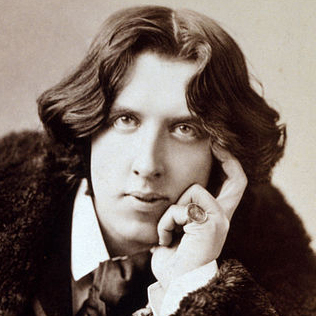
James Joyce, the single most Irish-obsessed writer the country has ever produced — a man who reconstructed the entire geography of Dublin from memory while living in Trieste, Zurich and Paris, a man whose entire artistic project was arguably an attempt to hold Ireland at exactly the distance required to see it clearly — left the country at 22 and barely came back. Samuel Beckett wrote some of his most important work not in English, and not in Ireland, but in French, in France, partly because it let him get further away from the associations his native tongue carried. Oscar Wilde became the most famous wit in London society, and while nobody who has read him for five minutes could mistake him for anything but a Dubliner in sensibility, he built his entire public persona in a different country, performing a kind of Irishness that was, in its own way, just as constructed and consciously worn as anything a modern diaspora kid does on the 17th of March.
George Bernard Shaw put it more bluntly than most: he left Dublin at twenty and later said, essentially, that everything interesting about him happened after he got out. That's not someone comfortably marinating in an unconsidered identity. That's someone actively working out what to keep and what to shed.
So maybe the real pattern isn't "the home-grown ones didn't have to think about being Irish, and the diaspora does." Maybe it's closer to this: everyone who does anything interesting with an identity ends up interrogating it, sooner or later — the only real difference is which direction they're facing when they do it. The writer in Dublin has Ireland as the water and has to leave to see the shape of the fishbowl. The great-grandchild in Boston or Perth has Ireland as a specific, chosen, sometimes half-invented destination, and has to build the fishbowl from photographs and family stories and a few bars of a song someone's grandmother used to hum.
The diaspora who built the country back
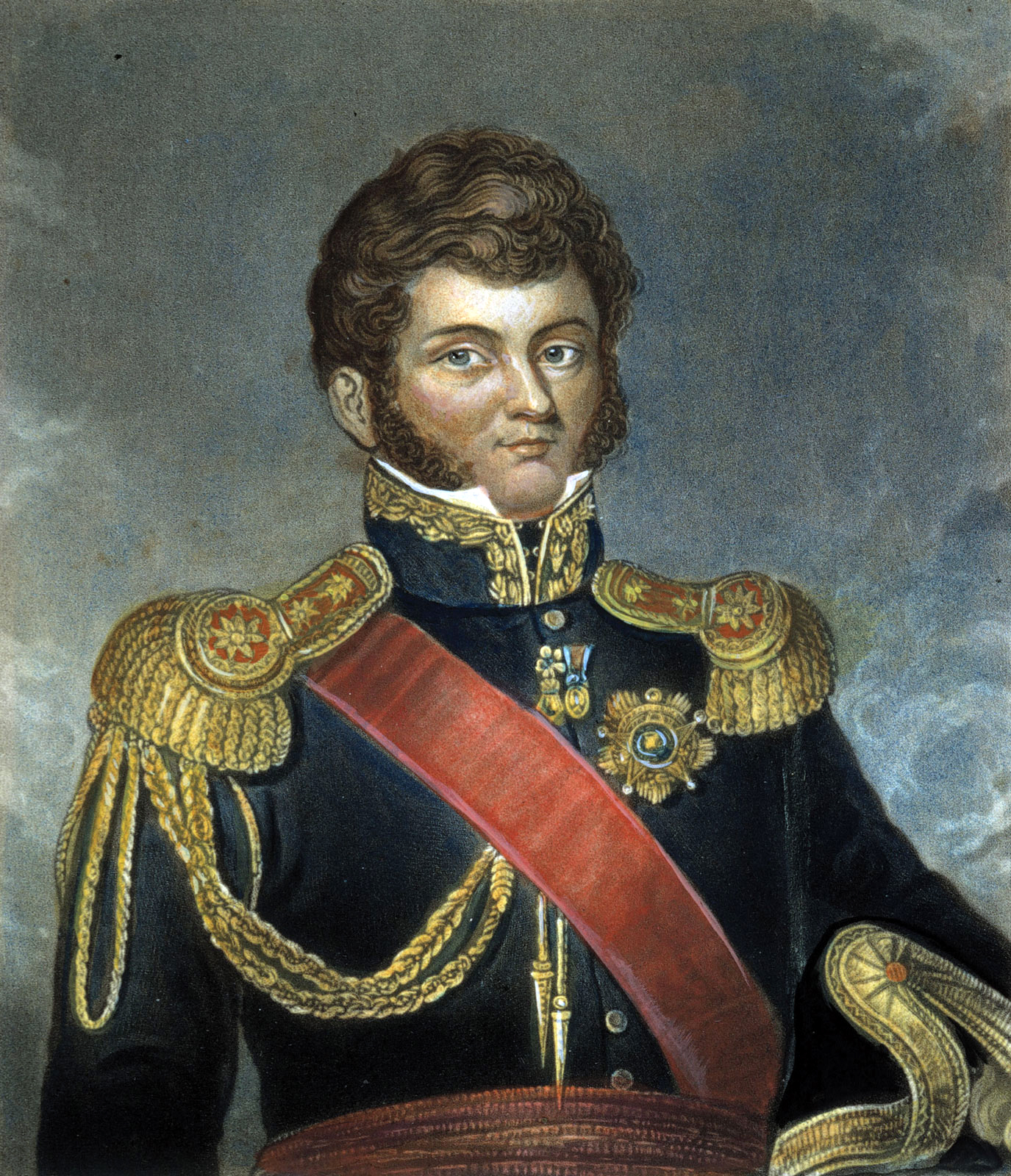
If you want the single best rebuttal to the idea that "claimed" Irishness is somehow the lesser, more diluted version, meet Bernardo O'Higgins.
O'Higgins — son of an Irish-born Spanish colonial governor — is one of the founding fathers of Chile. Not "an Irish-adjacent footnote to Chilean history": genuinely one of the people who made the country exist as an independent state, complete with a statue-and-street-name presence roughly equivalent to a South American George Washington. He never lived in Ireland. His Irishness was entirely inherited, entirely secondhand, entirely a matter of a father's name and a father's stories — and it clearly mattered enormously to him anyway, right down to the name he carried into the history books.
That's the pattern that keeps showing up wherever the Irish diaspora put down real roots: John F. Kennedy's family leaving Wexford in a famine-era hold and ending up, four generations later, running the United States; the countless "Irish Brigades" that fought under other flags across two centuries, keeping the harp on their buttons and the old counties in their unit names decades after anyone in the ranks had actually set foot on the island. None of these people were less committed to being Irish because the connection ran through memory rather than residence. If anything, they were often more committed — because unconsidered identity, by definition, doesn't require effort, and everything on this list took real, sustained effort.
A word on the performance of it all
Let's also just admit, affectionately, that diaspora Irishness has produced some genuinely funny theatre over the years. The claddagh ring worn with more conviction than most wedding vows. The Aran jumper bought in an airport gift shop and treated like a family heirloom by sundown. The precise, defensive way some people say "well, my grandmother was from Cork" the second anyone questions their right to a green hat on the 17th of March. None of this is a criticism — it's closer to admiration. People do not go to that much trouble, buy that much tweed, or learn that many bars of a song they can't fully pronounce, for something that doesn't actually matter to them. The performance is not proof the feeling is fake. If anything, it's proof of exactly how hard people are working to hold onto something they were only ever handed secondhand.
So which is more "real"?
Here's a genuinely uncomfortable question worth sitting with: is an identity you never had to examine actually a stronger identity than one you had to build on purpose?
There's a case for "yes" — the home-grown version is unmediated, direct, doesn't rely on inherited stories that might have gotten polished or exaggerated three generations down the line (we've all met someone whose "granny from Cork" turns out, on inspection, to be somewhat aspirational).
But there's a genuinely strong case for "no," too. An identity you have to actively choose, research, explain to your own kids, and occasionally defend at a dinner party is, in a real sense, a practiced identity — closer to a muscle than a birthmark. The diaspora Irish don't get to take it for granted, so they don't. They ask the questions the home-grown greats mostly only asked once they'd left. In a strange way, the Irish-Chilean or Irish-Ohioan wrestling with what the label actually means to them is doing, right now, at the kitchen table, more or less exactly what Joyce was doing from a rented room in Trieste.
Over to you
Which brings us to the actual point of this post, because we didn't write this many words just to have an argument with ourselves.
We want to hear from you. Not the polished, tea-towel version of Irishness — the real, specific, sometimes funny, sometimes complicated version. What does being Irish actually mean to you, wherever you are? Is it a feeling, a fact, a choice, an inheritance, a running joke with your cousins, a genuine ache on certain nights, all of the above depending on the day? Did it skip a generation in your family and come back stronger, or fade a little further with every one? Has anyone ever told you you're "not really" Irish, and if so — what did you say back?
We're going to be putting the same question to a number of well-known living Irish figures across the arts and sciences in the weeks ahead, and publishing their answers here too. But we wanted to open with the people this whole platform actually exists for: you. So tell us. Argue with us. Argue with each other, politely, in the comments. What makes the Irish Irish — and does it look different depending on which side of the ocean you're standing on?