Walk into a session in Galway on a Thursday night, and there's a decent chance the same set of tunes is being played, at roughly the same time, in a pub in Boston, Sydney or London. Not by coincidence — by design. Irish trad music was built to travel, long before anyone thought to call it that.
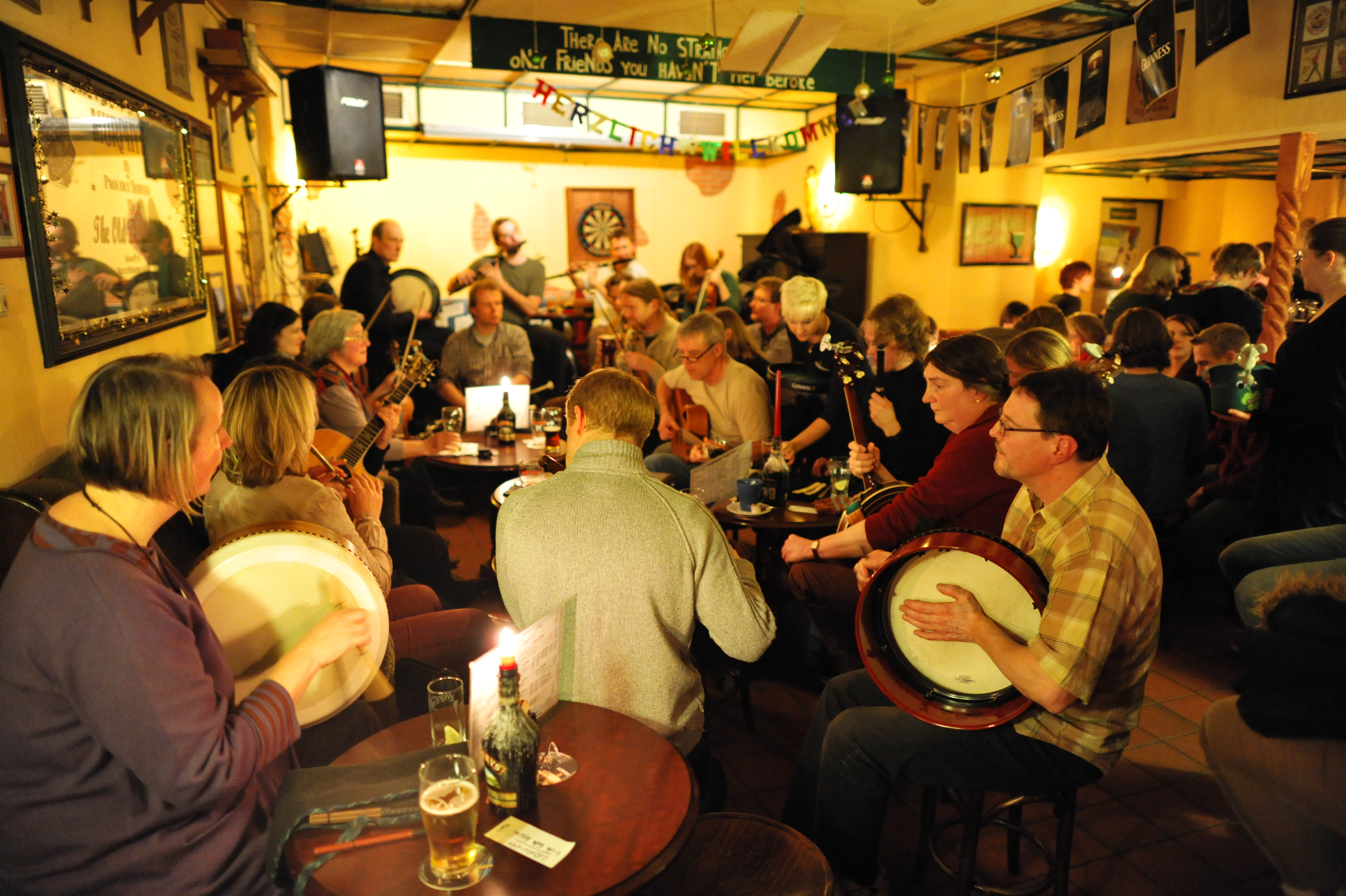
A session doesn't need a stage, a setlist, or even an audience. It needs a few musicians, a round of drinks, and an unspoken agreement about which tune comes next. That portability is exactly why it survived a century of emigration intact, while so much else got left behind at the harbour.
Built for the pub, not the concert hall
Unlike most musical traditions, trad was never really designed for formal performance. It grew up in kitchens, at crossroads dances, and eventually in pubs — informal, circular, driven by whoever showed up with a fiddle or a flute. That structure turned out to be exactly what a scattered diaspora needed: a form of music that could be recreated anywhere, by anyone who knew the tunes, with no need for a venue, a promoter, or even much notice.
Emigrant communities didn't just bring records with them — they brought the ability to make the music themselves, wherever they landed. A session in an Irish pub in Chicago in the 1950s wasn't a tribute act. It was the same living tradition, just further from home.
The tunes as a shared language
Part of what makes this work is that the repertoire is genuinely shared. A reel learned in a kitchen in Clare and a reel learned in a community hall in Boston are, more often than not, the same reel — passed down by ear, session to session, generation to generation. Walk into a session anywhere in the world with a few dozen tunes under your belt, and you can sit in.
That's a rare thing for any tradition to hold onto across an ocean and several generations. It means the music isn't just nostalgia — it's still functional, still being played the way it was always meant to be played: together, in a room, for no reason other than that it's Tuesday.
Why it still matters
For a lot of the diaspora, a local session is the closest thing to home available on a given night — not a performance of Irish culture, but a genuine, ongoing part of it. The tunes don't care what county you're in. That's rather the point.